

Blog Details
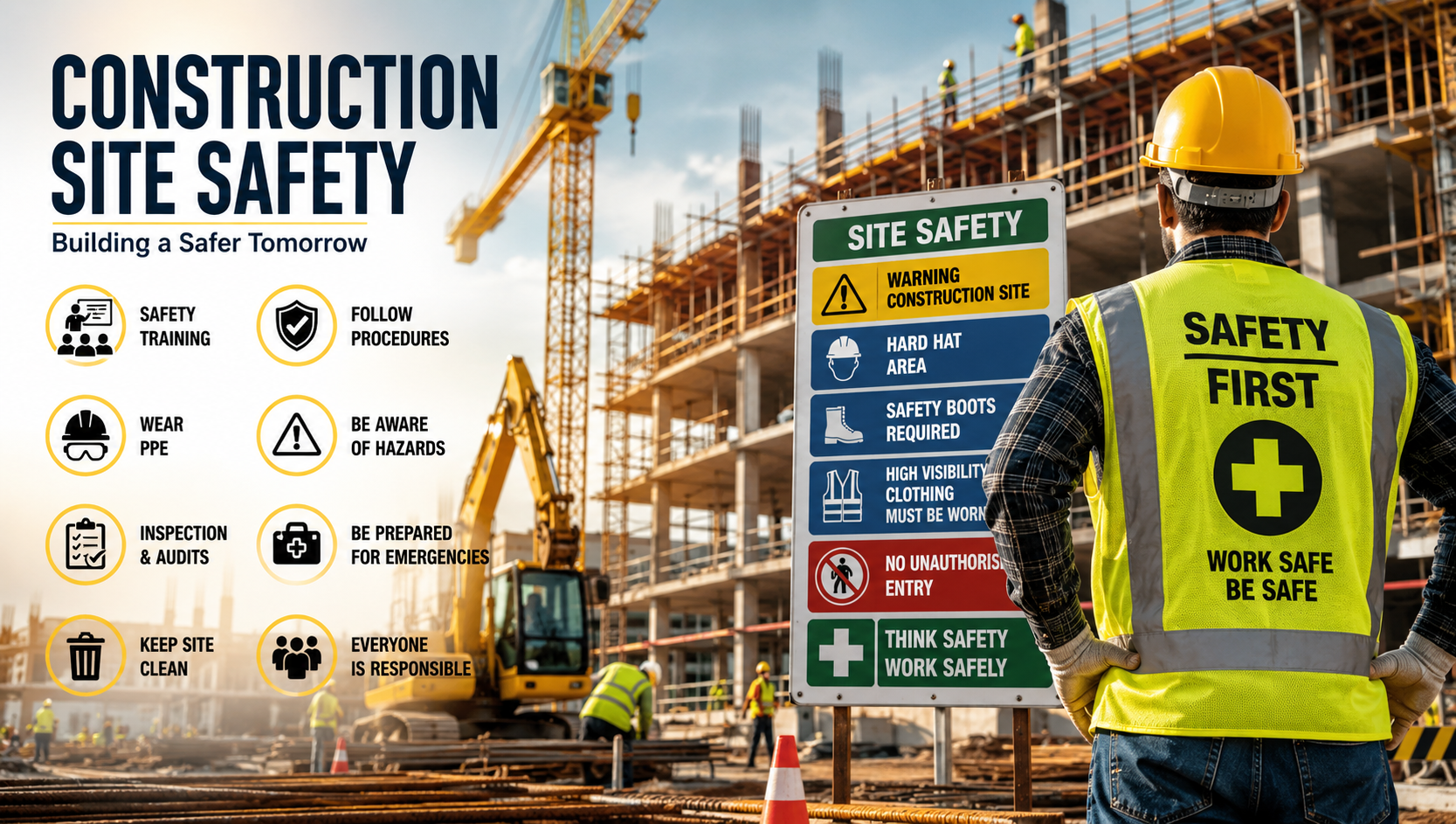
What are the basic safety features at any construction site?
Due to our ignorance or some accidents, working in a construction site is always involved with risks. However, with the following practices adopted in sites, we can considerably reduce the mishaps and
Working at a construction site is always associated with risks due to ignorance, unsafe practices, or unexpected accidents. However, by adopting proper safety measures and maintaining strict safety standards, mishaps can be considerably reduced and overall site safety can be improved.
Importance of Safety Training at Construction Sites
Every worker entering a construction site should receive site-specific induction training on safety. This training helps workers identify high-risk areas and provides guidance on basic emergency management procedures. Proper awareness can prevent many accidents before they happen.
Conduct Regular Safety Audits
Construction work often involves unpredictable risks, making it impossible to eliminate every danger completely. However, many accidents can be avoided through regular safety audits and by implementing standard operating procedures for all activities. Identifying potential risks in advance helps improve workplace safety significantly.
Implement Strict Security and Safety Protocols
Construction sites should follow strict security and safety protocols at all times. Limiting unauthorized access to the site helps protect heavy equipment and machinery from theft and damage. Proper monitoring and controlled entry systems also contribute to worker safety.
Separate Entry and Exit Points for Heavy Vehicles
To strengthen pedestrian safety, separate entry and exit points should be established for heavy machinery and vehicle movement. This reduces congestion and minimizes the chances of accidents at high-traffic points within the site.
Safe Storage of Hazardous Materials
Chemicals and other hazardous materials should always be stored carefully to reduce the risk of fires, explosions, chemical injuries, pollution, and asphyxiation. Proper labeling and storage practices are essential for maintaining a safe construction environment.
Electrical Safety Measures
Overhead and underground power transmission lines can be extremely dangerous. Construction workers must maintain a safe distance from these lines, ensure proper grounding, and use insulated sleeves for electrical products. Heavy equipment should always be de-energized when not in use.
Extension cords should also be checked regularly to ensure they can safely carry the required current without causing fluctuations or overloading.
If portable electrical equipment is used in damp environments, transformers should be used to isolate voltage between conductors, ensuring it does not exceed 230 volts.
Display Safety Signage Clearly
Safety signage should be displayed clearly throughout the construction site. These signs should include emergency contact numbers available 24x7, along with detailed maps showing the location of fire extinguishers, first aid supplies, emergency exits, and site amenities.
Workers should always follow safety signs and procedures without exception.
Provide Proper Personal Protective Equipment (PPE)
Employers must provide Personal Protective Equipment (PPE) kits to all workers based on the nature of their work. PPE may include:
- Safety harnesses
- Safety goggles
- Head protection gear
- Ear plugs
- Other essential safety equipment
A dedicated safety officer should also be appointed to ensure proper usage of PPE by workers at all times.
Maintain Cleanliness at the Construction Site
Keeping the construction site clean throughout the work shift helps reduce slip and trip hazards. Proper housekeeping practices improve both productivity and worker safety.
Use the Right Equipment Properly
Workers should always use the correct equipment for the specified task. Before beginning any work, the condition of the equipment should be visually inspected to ensure it is safe and suitable for use.
Conclusion
Construction site safety should never be ignored. By following proper safety procedures, conducting regular inspections, providing adequate training, and ensuring the use of PPE, construction companies